

The Short Answer
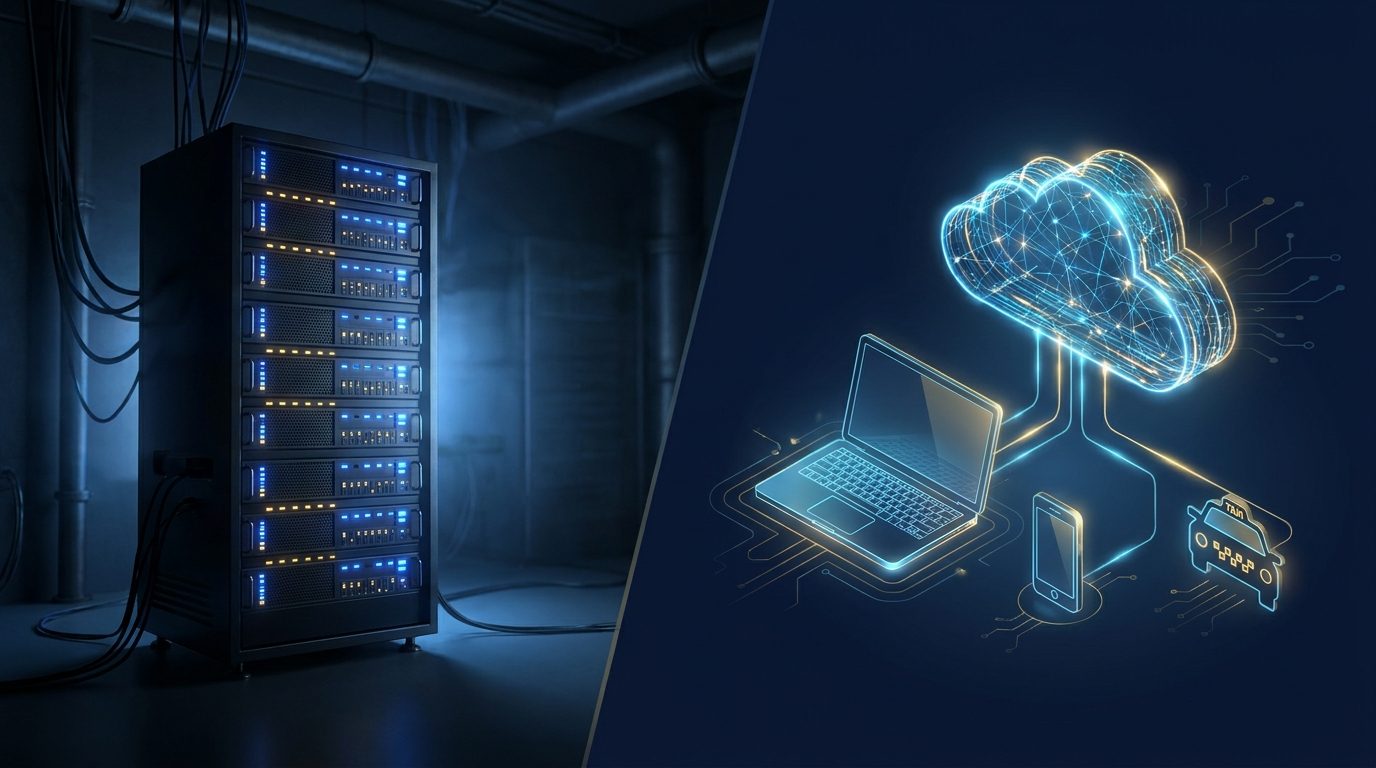
A cloud-based dispatch system runs on the vendor's servers and you pay a subscription. An on-premise system runs on servers you buy, host and maintain yourself. Cloud is faster to start and easier to scale. On-premise gives more direct control but costs more upfront and needs your own IT support.
What Is a Cloud-Based Dispatch System?
A cloud dispatch system is software you open in a browser or app. The vendor hosts the servers, applies updates, runs backups and keeps it online. You usually pay monthly per vehicle or per user. Dispatchers, drivers and passengers connect over the internet from anywhere.
What Is an On-Premise Dispatch System?
An on-premise system is installed on servers in your own office or data centre. You buy the hardware, install the software, manage backups, apply security patches and fix outages. Updates arrive on the vendor's release schedule and often need your team or a technician to install them.
Cloud vs On-Premise Compared
| Factor | Cloud-based | On-premise |
|---|---|---|
| Upfront cost | Low, often no hardware | High: servers, licences, setup |
| Ongoing cost | Monthly subscription | IT staff, power, maintenance, licences |
| Setup time | Days to a couple of weeks | Weeks to months |
| Updates | Automatic | Manual, scheduled by you |
| Remote access | Built in | Needs VPN or extra setup |
| Scaling | Add vehicles instantly | Buy more capacity |
| Backups and recovery | Handled by vendor | Your responsibility |
| Control over data location | Vendor's data centres | Fully yours |
| Works with mobile apps | Native | Needs extra networking |
Cost Over Three Years
Cloud spreads cost into predictable monthly payments. On-premise front-loads cost and adds hidden items later: hardware replacement, backup storage, security patching and the staff time to run it. When you price both, include:
- Software licences or subscriptions
- Servers and networking equipment
- IT labour and support contracts
- Backup and disaster recovery
- Downtime risk
Security and Uptime
Reputable cloud vendors run monitored data centres with encryption, redundancy and tested backups, which many small fleets cannot match in-house. On-premise can suit businesses with strict data-residency rules or an existing IT team, but a single office server is also a single point of failure.
Which One Should You Choose?
Choose cloud if you run drivers on phones, want live tracking and passenger apps, have no IT team, or plan to grow. Choose on-premise if a regulation or contract forces you to host data yourself and you have staff to maintain it. For most taxi, limo and chauffeur operators, cloud is the practical default. See how Ridxo's cloud dispatch platform works, or review pricing.
Frequently Asked Questions
What is the main difference between cloud and on-premise dispatch?
Where the software runs. Cloud runs on the vendor's servers and is paid monthly; on-premise runs on your own hardware and you maintain it.
Is cloud dispatch software secure?
Reputable vendors use encryption, access controls and regular backups. Ask any vendor about their security practices and data-hosting locations before signing.
Is on-premise cheaper in the long run?
Not usually for small and mid-size fleets. Hardware, IT staff and maintenance often outweigh subscription fees over three years.
Can a dispatch system work offline?
On-premise office tools can run on a local network, but driver apps and live tracking still need mobile data. That is why most fleets prefer cloud.
Can I migrate from on-premise to cloud?
Yes. Most cloud vendors import customers, drivers, vehicles and booking history. Ask for a migration plan and timeline before you commit.